Showing posts with label Miscellaneous. Show all posts

Wednesday, September 9, 2015

VP Candidates: Thinking about Bernie's Future, or Holy Rosa Luxembourg! We're doing it!

Thinking about Bernie's Future, or Holy Rosa Luxembourg, We're doing it!

Hello, Genossinnen und Genossen!

As I write this (August 30th), I've just returned from a day's canvassing for Bernie Sanders in Burlington, Iowa! My timing couldn't have been better- I was part of the team on the day that the Des Moine Register found that Clinton's lead has shrunk by two thirds! She now leads Sanders by only 7 or 8 points, depending on whether Biden enters the race as well.

Let that sink in. Within single digits in Iowa, winning in New Hampshire. And the debates haven't even happened yet.

If Sanders wins both Iowa and New Hampshire, or even loses Iowa by less than expected, this primary cycle will go on for a long time. It will get harder of course: Sanders will need to build up organizations in many more states to sustain the current trajectory, which can be nigh impossible for a campaign eschewing big dollar fundraising...


-just click the link to mitigate that problem:)

and compete in larger states where campaign events matter even less relative to television spending than they do in comparatively small and intimate Iowa ad New Hampshire. That said, the flurry of media attention resulting in such a scenario would go a long way towards mitigating Bernie's comparative fundraising disadvantage. 
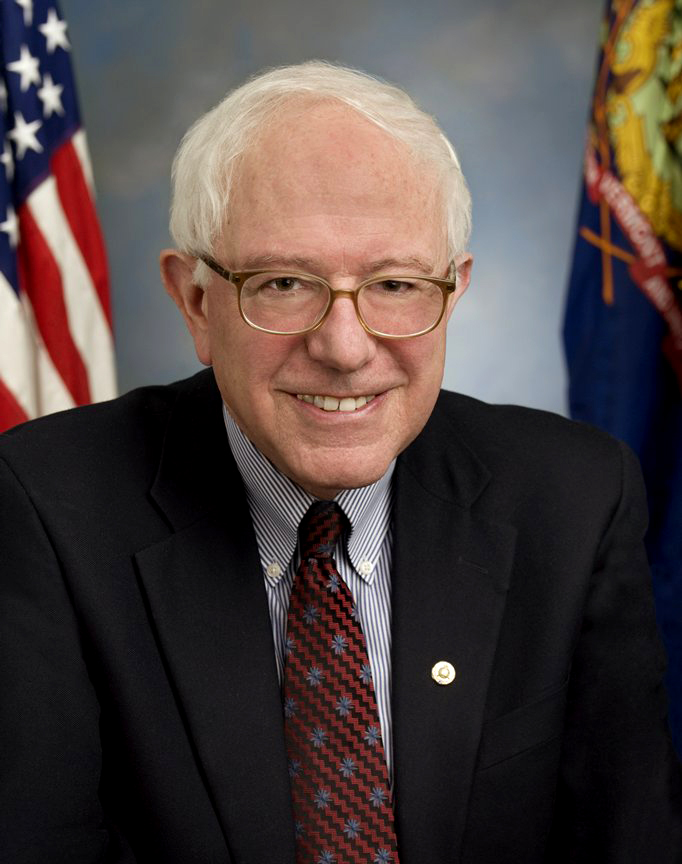

In short, it now looks conceivable that Senator Bernie Sanders could be the Democratic candidate for president in 2016, but only after an incredibly long, strenuous, season-long primary fight, probably being ultimately decided by late caucus results and with an element of uncertainty lasting until the convention itself. Something like this hasn't happened since 1972, when the George McGovern insurgency, with the help of their Feminist, Student and Gay comrades, ultimately prevailed and threw open the doors of the Democratic Party for the first time. This was a triumph not since equaled by the American left, and while McGovern didn't win, the coalition around him has strengthened, achieving many of his campaign's goals, and bringing the Democratic Party (however reluctantly) into the 21st century, at least on many issues of social policy.

Sanders could well do better, but that's not what I'm writing about today.

You see, one of the many, many lessons of 1972 is that picking a VP candidate takes lots of time, time that a small scale campaign boxing well above its weight class doesn't always have to spare. So I wanted to go through the qualities that would be helpful in a crassly political way to our movement for Democratic Socialism through a Sanders presidency, and then analyze the merits of ten possible choices, (and rule out four popular ones.)

At the time of the election, Sanders will be five years older than the oldest president ever elected, and while he is apparently in good health, age will be a consideration in a running mate. Much of this is going to be crass ticket balancing talk. And with a northeastern, white, elderly, male, religiously agnostic, culturally and ethnically Jewish representative of the far Left as a candidate, we have a lot of balancing to do.  Therefore, we could use

  1. An ideological Goldilocks. We need a candidate sufficiently removed from Sanders' ideas to show that we're still open to working in the mainstream of Democratic and democratic politics. At the same time, we need someone who will likely work to protect whatever Sanders accomplishes, ( http://grahamkrueger.blogspot.com/2015/07/why-president-sanders-could-actually-do.html ) and therefore shouldn't be too conservative either. A current Clinton supporter could do this nicely.
  2. Executive Experience- voters like people who have been in charge of something, anything no matter how small, much more than they like someone with legislative experience. While Bernie does have a commendable record as mayor of a midsize city, finding a governor would be excellent.
  3. Outreach: This is partially a function of time, but as Genossin Sophie has written ( http://grahamkrueger.blogspot.com/2015/08/black-lives-matter-and-bernie-sanders.html ), there is a perception of friction between the Sanders campaign and minority communities, and an even less justifiable perception of one between the campaign and women. Putting it bluntly, on every issue of representation- women being the oppressed majority of voters, and our Black and Latin@ comrades being at the forefront of the struggle in so many ways, as well as for crass political considerations, Sanders' running mate should probably not be a white male, though an astute observer will note that I have included a few possible choices from that demographic as well.
  4. Region: New England is not the most popular region of the country, sadly (for the same reasons that make it certainly MY favorite), so if Sanders can get someone from the “heartlands” it would help us in several ways.
  5. Youth. Can we please get a VP less then 65?
  6. Finally- an Obama Goldilocks- as well as an ideological Goldilocks- someone who has served the president by appointment and will be appreciated for it in mainstream Democratic circles, BUT not someone high profile enough that the Right-Wing have included her or him in most of their attacks on the president. (Think 1920: Governor Cox made this same calculation with regard to the Wilson administration, and picked then-Assistant Navy Secretary FDR as his VP candidate)

Before we begin, I sadly must eliminate some otherwise exceptional candidates for various reasons. Senator Elizabeth Warren: she hates campaigning, and doesn't add much regional value, and has practically no ideological distance from Sanders. Federal Reserve Chairman Janet Yellin is excellent, but far too valuable (and irrepaceable) in her current (unpopular) position. California up-and-comer and birth control activist Sandra Fluke is too young to be legally eligible still, Oregon Governor Kate Brown, while a capable legislator has failed every test of leadership on environmental issues, and former Michigan Governor Jennifer Granholm who would be maybe the ideal candidate... is actually Canadian. Well Goddamn it.

New Hampshire Governor Maggie Hassan is in class by herself, because she would be an ideal candidate in all ways except region, but is currently locked in a politically damaging budget fight.  If she pulls through that ok, I'll revisit my decision to exclude her form the list.

Let's start the rundown with our top-tier eligible candidates.  All pictures from wikimedia commons.  Thank you, internet sharers!

  1. Former Secretary of Labor (2009-2013) Hilda Solis. I've got to say, at this early juncture, my recommendation would be Hilda Solis. She has an excellent state legislative record on energy issues, especially cleaning up polluting systems in minority neighborhoods. She's been a lifelong campaigner for union organization and environmental justice- lifelong at the comparatively young age of 57. While a long-term Democrat she does have a history of independence on important issues- she defied the California Democratic Party to primary challenge an antichoice incumbent Democrat and won in 2000. As Secretary of Labor, she massively expanded the wages and hours enforcement division, oversaw the levying of record fines against BP for a disastrous piece of 2005 negligence. Solis was also able to suspend some guest worker restrictions that Bush enacted shortly before leaving office. Hell, I like Obama more for reading about this woman being in his cabinet! She was the most underrated part of his administration, but hasn't caught any major flak since 2009. She's also a longtime Clinton supporter, for what it's worth. I can't think of a better choice for the first Latina on a major party national ticket, or for Bernie's vice president.

    Hilda Solis official DOL portrait.jpg


  2. 2.  Former Governor of Massachusetts (2007-2015) Deval Patrick.
    Following a major increase and redistribution of school funding, Governor Patrick presided over the biggest improvement in student performance in the country. He also brought Massachusetts into the New England Greenhouse Initiative, increased infrastructure resources, preventing the institution of a regressive, unfair toll system, and has always done whatever it takes to protect Planned Parenthood from anti-choice terrorists. Has a rock-solid gun control record too. Governor Patrick would strengthen any administration, and any campaign- highly intelligent, truly progressive, two term governor of a major state... He also happens to be African-American, though we get no regional bonus here- Vermont and Massachusetts being close as they are.
    2007 DevalPatrick 445495309.jpg


  3. Consumer Financial Protection Bureau Director Richard Cordray- a popular Obama appointee from swing state Ohio, Cordray leads the bureau set up under Elizabeth Warren to investigate market manipulation and swindling by financiers. Again, very little policy difference, and a nominated Sanders frankly shouldn't give the only office sure to be in his gift: the Vice Presidential nomination of the Democratic Party- to a white man in 21st century America. Cordray is a brilliant administrator though, and if Solis and Patrick are both out of the picture, we could do a lot worse.
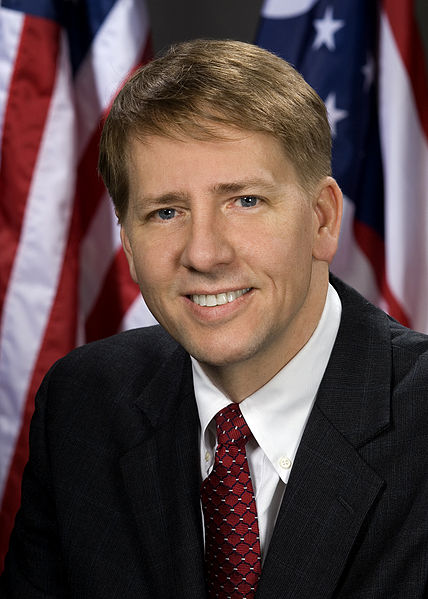
    File:Richard Cordray.jpg

  1. Attorney General Loretta Lynch: though she, like Obama and her predecessor, Eric Holder, has been known to cozy up the the big banks and get them off the hook, but has been an effective spokeswoman on issues important to the Black Lives Matter movement, and gotten major international star power for her role in the investigation into football/soccer corruption. She'd bring a lot of star power with no real drawback except that she is pretty much a Republican on many economic issues. Put it this way- I'd love to see her working WITH Bernie, not INSTEAD of him. She's be a great leader on so many issues, but I wouldn't trust her with Bernie's economic plans. 
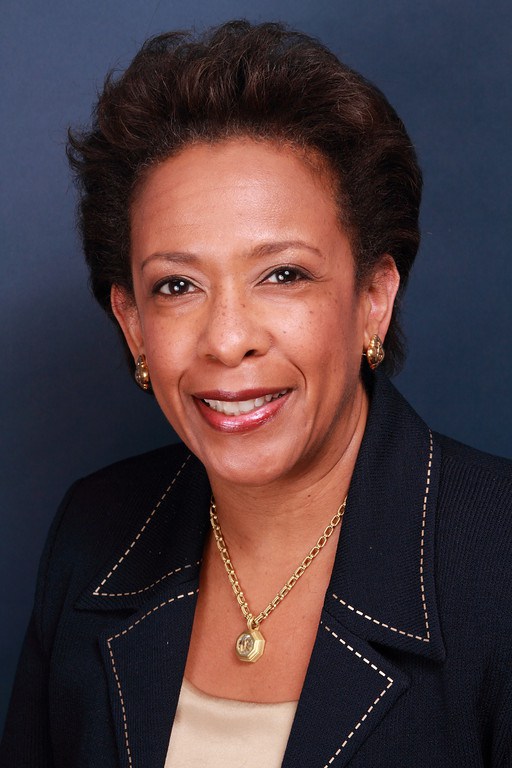
    Loretta Lynch official photo.jpg

Past the top tier now, these others will be less ideal choices but still worth considering as the previous ones are eliminated from consideration by one mishap or rejection or another.
  1. Non-Profit Director Michelle Nunn- a moderate Democrat from Georgia whose highest political office has been a losing run at a senate seat might not top many people's lists, but Nunn has years of experience and contacts heading Bush 41's charitable foundation, and is well respected by many political actors. She also ran a really, really fine effort in a very bad year, and came up closer than she could have. Having a native daughter on the ticket could help put certain areas of the south that are crying out for economic justice into play.
    File:Michelle Nunn 2012.jpg 

  2. Admiral Mike McMullen- a true ticket balancing choice despite being another white male- this former Joint Chiefs Chairman does tend to be pro war, however he did testify honestly about the impossibility of successfully maintaining our occupation of Iraq in 2007, and has been a strong advocate of LGBT personnel in the military. But he's almost as old as Bernie.  (No wikimedia picture available)

    Ok, here come the really bizarre choices who could nonetheless be helpful in some areas and terrific in office- I'm sure there are more possibilities here- if you know of some awesome congressman or former governor I've forgotten, comment! Actually, comment anyway.


  3. Milwaukee Congresswoman Gwen Moore: great advocate on Civil Rights and childcare issues, she's at least as good a campaigner as Bernie himself. Also has the distinction of being the last person to defeat Scott Walker in anything. She's not terribly well known, and congressmen seldom make effective running mates. 
    File:Gwen Moore 113th Congress.jpg

  4. Wisconsin Supreme Court Justice Ann Bradley: maybe my former local colors are showing, but Wisconsin is a midsize state that has turned sharply over the cliff of Right Wing Extremism, and most any Democrat will need to pull it back somehow in a close election. Why not look at the last progressive to win a statewide election in Wisconsin then? Picking a judge is an extremely unusual choice- it was last seriously discussed in 1944 I think- but I can see certain advantages to it: for one, it reinforces the concept of rule of law, which can be handy to have around when you're talking about a revolution. For two, this particular judge has a great history on union rights, and three: she has no power in her current position anymore. The Republican response to losing to Bradley was to relocate the meeting place of the Supreme Court and refuse to tell her when or where, preventing her from voting on most cases. I'm not kidding. This is actually moderate compared to the abuse she usually suffers- her fellow Justice, Bart Prosser actually vaulted the table and strangled her to try to persuade her to vote in favor of Walker's union busting Act 10. She didn't back down, which is more than can be said for many Wisconsin Democrats who weren't so physically threatened. 

     biography-photo


  5. Gavin Newsom- progressive Lt. Governor of California, former San Francisco Mayor, as far as I know everybody likes him though he doesn't command a very well-respected office yet. Since Kamala Harris is precluding him from running for senate, he might be amenable. He should be considered as an up-and-coming rockstar in his own right, not for the office he holds though.  If this were in the offing, Jerry Brown should probably step down to give him a year or so as governor
    https://upload.wikimedia.org/wikipedia/commons/e/e4/Gavin-newsom.jpg


  6. Nina Turner- badass Ohio state senator, who bravely led the fight against round after round of voter suppression last year in her campaign for Secretary of State. I can't really imagine a state senator making it onto a national ticket, but she's looking to be Ohio's next Sherrod Brown if not next Dennis Kucinich, and we should pay attention to her at least.

    (No wikimedia picture available) 


    Ok, Genossen und Genossinnen- that was wildly premature, but I hope you like what you see.  Most of these leaders are worth watching and supporting in their own right, so look into them and think who you'd most like to see with Bernie.

    Solidarität
    Genossin Elise


Wednesday, June 24, 2015

Reading Ho Chi Minh

Onto a lighter note, a good friend recently gave me a collection of Vietnamese liberation leader Ho Chi Minh's speeches, and I thought I'd comment on parts of them.

By 1922 Ho was engaging with both the French Communist movement and that of his own country, obviously still under occupation, and he pointed to the role racism on the part of the French and suspicion on the part of the Vietnamese played in inhibiting collaboration between the two movements. The Vietnamese colonial government was plainly terrified of something like this happening- going so far as to ban (enforced with prison time) the circulation, possession, or reading of the French political press in Vietnam. In the light of current resistance to the Trans-Pacific Partnership, this familiar concern is worth repeating: Capitalism creates pressure to find new markets, sources of labor and materials, and this means that jobs are increasingly done in colonized regions where lower levels of development and regulation enable business to rely on what amounts to slave labor or indentured servitude. It seems to me that businesses engage in something of a “prisoner's dilemma” in which their profits are maximized if they have no employees anywhere that requires a living wage or basic human rights, but only if the people in those countries have enough resources to keep buying their products. It seems then that the ideal circumstance for a business would be to be the only one using cheaper labor than its competitors, but since this can't be done, the entire world is now in a race to the bottom. Ho would tell us to recognize all the victims of this system- the slaves in the new sweatshops as well as those condemned to poverty and often incarceration by the amputation of the means of production from the workers who previously serviced them, and to try to work together. This seems particularly relevant in light of rising Islamophobia, deployed to keep us from empathizing with Arabs or Southeast-Asians, frustrating any effort to build a political movement with these comrades in the struggle.

Ho goes on in later speeches to recount colonialist atrocities which, then as now- from British troops raping their charges on peacekeeping missions to the US torture regime in prison camps at Guantanamo and Abu Ghraib- escape all accountability. He lists the Belgian regime in the Congo as slaughtering 2/3 of its people, as well as the crimes perpetrated by my ancestral homeland, Germany in our occupation of Namibia- 2 entire tribes with unique cultures were entirely exterminated, going on to say more of the massive death tolls inflicted in French-controlled areas. Domination by foreign powers, be they states, companies, or supra-state organizations, has consistently led to meddling in agriculture and attendant famines, repression of local control, environmental degradation, and gross abuses of human rights. In a time in which we're asked to support further invasions abroad, further ceding of power to corporations, and the forced sale of public assets to private actors, it's always useful to rehash this litany of abuse.

Ho mentions the increased development of a working class in Vietnam as a result of increased capitalization of the economy: this is a typical Leninist perception of the pattern- when people are concentrated in labor intensive enterprises, they become more cognizant of common experiences and the systems which produce them. At this point in Vietnamese history a vanguard party formed- Leninist concept to compensate for the fact that full-time employment is not the most conducive state to political activity and observation, requiring an oppressed people to fund a general staff of political leaders to serve in the vanguard, as it were, of the movement. The concept seems reasonable enough to me. I'll be reading more Lenin next- if I can get through the extensive sections that are just insults of rival movements, I'll try to post a follow-up review of some of his work.

On Patriotism, Ho seems to describe the dangers of nationalism- he holds that love of the state and country has proven necessary to repulse attacks on Socialist development before, a kind of safe patriotism that motivates loyalty rather than xenophobia. This still disturbs me, primarily because I don't think we can point to any successful examples. Even in the Soviet Union, there were significant drawbacks to being any ethnicity other than Rus, and nationalistic loyalty seems to blind us to faults of the group in question, but some sort of union with the forces of nationalism seems to be necessary for anto-colonial Red movements.

There's an interesting response to Khrushchev's denunciation of Stalin's excesses and the institution of the cult of personality, in which Ho declares his support for Khrushchev's attempts to return the party to prominence over any individual leader (for more details see my thesis part 3), and warning of the danger in any system that recognizes individuals more than systems. This is particularly interesting as an early sign of Ho's preference for the Soviet Union over the People's Republic of China, which was outraged by Khrushchev's deviation from Stalin's example.

Ho mentions the dangers of individualism, and as one who has sparred with more than her share of post-modernists, I found his insights particularly satisfying. Ho points out that showing off knowledge without using it to solve practical problems is an individualistic indulgence that doesn't help anyone.

I'm especially interested in what agricultural reforms were pursued- perhaps someone who knows more could explain this to me, or I'll find the time to seek more detailed history- if Ho is to be believed (and I want corroborating sources) Vietnam seems to have pulled off a successful collectivization with increased productivity, even amid a war with mass defoliation and destruction of Vietnamese crops. I'd love to know how they did it- how to go from a feudal agriculture system to a centrally or regionally planned modern one without allowing in exploitative foreign corporations or enduring severe shortages is quite a feat.

As for Ho's commentaries on constitution design, some fairly standard stuff, much of which I agree with, especially how rights are only available to all in a socialist society- sensible enough. Equality before the law is nigh unattainable in a society with class divisions to say nothing of the racial and gendered hierarchies that intersect with and sustain them. From Ho's public statements, we can see considerable rhetorical caution against Stalinist excesses, while acknowledging the overzealousness of some land reformers.

It all seems quite impressive, and I'm very grateful to Genosse Sam for the gift. I'd love to find some more information especially on the nuts and bolts of Vietnamese land reform and the Party's approach to it at all levels.

Solidarität, Genossinnen und Genossen

Wednesday, June 17, 2015

Leftist Analysis of Gilbert and Sullivan's Utopia, Ltd. Or the Flowers of Progress


Hello, all.

Here's the piece I promised the comrades at Kos on Utopia. It's one of Gilbert and Sullivan's last collaborations, and most critics and enthusiasts alike seem to scorn it. My partner and I came very close to getting this staged at our college two years ago, and I still crave a chance to be involved with this show, or at least see it in its entirety. (I've listened to every version of the soundtrack I can find including one which includes the full libretto).

I'd particularly recommend finding “In Every Mental Lore/Let all Your Doubts Take Wing”, “A King of Autocratic Power We”, “Zara's Return”, “It's Understood, I Think”, “Some Seven Men form an Association”, Act 1 Finale, “Society has Quite Forsaken” (the show stopper) and the libretto-heavy penultimate song (the finale is a shameless tribute to British superiority, apparently thrown in to soften the blows landed earlier in the show) on youtube before reading this, but to each her own.

For those who don't know, William Gilbert (librettist) and Arthur Sullivan (composer) were English dramatists active in the late 19th century. They collaborated on 14 light operas (bearing more resemblance to modern musicals than to opera), 13 of which survive. Their three biggest hits were H.M.S. Pinafore, the Pirates of Penzance, and the Mikado. After their well received twelfth work The Gondoliers, they had one of their many fights and split up for several years. Their mutual patron, Doyly Carte, got them to collaborate for two more projects, neither of which was as successful as their earlier twelve, and this is a pity, because the first of these reunion operas is, in my opinion, the finest they ever wrote. Briefly stated- in order to escape assassination, a king must declare himself, his country, and each of his subjects to be a corporation instead of a person. It utilizes many of the same colonialist tropes as the Mikado while making them even more obviously absurd, and openly attacks the folly of forcibly assimilating other cultures. Most importantly, it contains the earliest “Corporations are NOT people” joke I know of (1893!)

Gilbert's Utopia- the setting for the show- is a supposedly primitive south pacific island which nonetheless has a good relationship with Great Britain (presumably one of the many such alliances made during the Napoleonic Wars), ruled over by the good King Paramount. Paramount wishes to bring his people (whom he has been told to think of as savage, or backwards) forward into the western community of nations by remodelling his society along British lines. To this end, he has sent his eldest daughter, Princess Zara, to study in Great Britain and she has returned, bringing with her the “Flowers of Progress”- experts in British business, local government, army, navy, censorship, and law, to help modernize Utopia. His Majesty has also employed an English Governess- Lady Sophy- to teach his two younger daughters how to be proper, and has fallen in love with her.

King Paramount can do all this on account of being “A King of Autocratic Power, We, a Despot Whose Tyrannic Whim is Law”, but there is a snag in his plans from which all troubles follow: under the Utopian Constitution, the King's power is to be absolute, albeit subject to the approval of two Wise Men (current incumbents Scaphio and Phantis), because the king is required by the constitution to wear a suicide belt, and, according to Scaphio and Phantis, “If ever a trick he tries he tries that savours of rascality, at our degree he dies he dies without the least formality”- as they can then summon the Public Exploder to His Majesty (current incumbent Tarara), whose job it then becomes to detonate the king. So functions the system of government known as “Despotism Tempered by Dynamite”.

These wise men, however are grossly corrupt, holding the king's life hostage every day to extort favorable policy, or more likely, shameful antics from his majesty, compelling him to write scandalous denunciations of his own character under assumed names for the society press, wherein he falsely accuses himself of dancing with housemaids and bathing in rum. They extend their wishes to lechery, aimed at the lovely princess Zara, and they make a pact to force the king to order his daughter to marry one of them!

King Paramount wishes to escape their grasp by any means necessary, and after conferring with Princess Zara and her lover, the army expert Captain Arthur Fitzbattleaxe, he agrees to take advice from Fitz and the other Flowers of Progress. Their recommendations are simple and obviously intended to be fallacious- make lawyers fully mercenary and indifferent to morals, build up public facilities to justify higher property taxes, censor all media hostile to the government, build up your army and navy because the Germans are going at attack Britain and her allies any day now (this is presented as a farcical error in judgment, which I do find darkly hilarious, albeit in a rather tragically different way than Gilbert probably intended), and adopt British corporate law- the Famed Joint Stock Companies Act of 1862, which allowed business to declare capital separate from individual managers' earnings, insulating owners from the consequences of failure. Finally, the banker promises that Britain will soon be governed exclusively by these corporate principles- “The date's not distant”!

There are three jokes that strike me as a bit dodgy, and two of them come here- the good natured but lovably corrupt banker explaining this is named “Goldbury” which I could interpret as a mild anti-semitic caricature, and his song does refer to the Rothschilds as symbols of wealth, which is of course accurate but Gilbert could just as well have mentioned Morgan instead, and I'm a little unsure. Dodgy joke number three comes in the show stopper and will be discussed later.

Inferring that financial immunity may mean legal immunity as well, King Paramount declares that he shall go down to posterity as “the First Sovereign in Christendom who Registered His Crown and Country Under the Joint Stock Companies Act of '62!”, and here ends act 1.

Some time passes ere Act 2 begins. Zara is still with Captain Fitzbattleaxe, and Utopia is thriving without the Wise Men's interference, as the king has declared himself a corporation, “If my speech is unduly refractory, you will find it a course satisfactory, at my early board-meeting to show it up, though with proper excuse you can trump any, you may wind up a limited company, but you can't conveniently blow it up!” and “as long as he confines himself to his articles of operation, we can't touch him!” Conferring with his new advisors (the Flowers of Progress) in song “society has quite forsaken”, Paramount reveals that he has taken their suggestions to heart and created a society nearly as good as Britain. The British colonialists are increasingly shocked as they hear (from the here oblivious king) that these supposedly primitive people have actually surpassed Britain, which Fitzbattleaxe attributes to the absence of parliament, but their attempts to conceal the truth from Paramount show that the Flowers actually know that they've been showed up by these islanders, who have.
abolished poverty, hunger and homelessness
Solved the labour question
Instituted merit-based nobility- especially among authors
brought amicable end to all divorces
Beautified their entire realm to the standards of the richest English neighborhoods.

The song (especially the second verse) is superb- it's only problem is in the stage direction (a really obscure joke) in that the Flowers have tricked the king into arranging the throne room in a style apparently common to the minstrel show- I had to do serious research to even figure out what they even meant by that. This is easy to fix in blocking differently, but it is a stain on an otherwise progressive show, and some productions seem to stage the following dance in a way that looks rather minstrel like to me. No blackface or anything like that is involved, but it could pose a problem to our sensibilities. The song does contain a crack at Utopia's “hereditary races” but in the context it seems to be a use of the old meaning of race- meaning family.

As an exclusively corporate economy, in which everyone can liquidate his corporate self to avoid paying any debt, while keeping his dividends to himself. Obviously, when left to its own devices and to make its own rules, business cannot function, and many who fail to grasp this (especially the villainous Wise Men) suffer greatly in the new economy, but Paramount's leadership delivers relief for all.

Realizing that they have lost their powers of extortion over the king, Scaphio and Phantis plot to raise a revolution in conjunction with the ousted Public Exploder. They manage to raise popular wrath “Upon our Sea-Girt Land” on behalf of the starving doctors and lawyers, since both crime and disease have been abolished under Paramount's unfettered leadership, and Paramount relents, instituting the critical reform of government by party, which is sure to lead to plenty of work for lawyers, constabulary and medicoes, and the day is saved, as Scaphio and Phantis are finally thwarted, and Utopia, Ltd. Is finally free.

What can I say? This is superb- the absurdity of corporate personhood is skewered from the opposite direction, rather the same one as that good chestnut of a bumper sticker that says “I'll believe corporations are people when Texas executes one” and separating personal benefit from professional action, all while showing the folly of the cultural posturing of imperialism. It also shows the absurdity of a business model that depends on being able to be the only one to get out of common rules. From stuffy 19th century liberals, this is an astoundingly subversive show with some really catchy tunes. And of course, the prescience of Gilbert's condemnation of the British military for its laughable insistence that war with Germany was imminent is hilarious both as an attack on the military-industrial complex and for its incidental wrong-headedness.

I'd love to get a discussion going about this and what messages we see reinforced!

Solidarität, Genossinnen und Genossen

Wednesday, September 3, 2014

Race in Dungeons and Dragons


I thought this would be a good time to address a concern I have about my primary hobby, Dungeons and Dragons.  Particularly, the comments in the game source material about race.
Race is used as one of several categorical descriptions for characters.  The traditional groups from which players can choose in 3rd edition are human, Elf, Dwarf (fantasy dwarf, not littleperson, although this itself could be somewhat problematic to anyone with a modicum of sensitivity), Halfling/hobbit, Gnome, and Orc (though usually only as villains), with human- orc and human-elf hybrids also being playable in standard format.  I believe that 

games like D/D and their source material are using “race” where it is actually scientifically accurate to use “species”, and in so doing are buying into several damaging and racist perceptions in our society. 

When the game was developed, race was used synonymously with the word “species” in some circles.  In the fantasy case, this practice was more likely grandfathered in from the J.R.R. Tolkien source material with no regard to whether or not it was appropriate, and has since been adopted unquestioningly by many other works in the fantasy genre which have missed the “ok for its time” excuse by several decades.

See, each of these character types have inherent advantages and disadvantages, measured in the six core abilities of Strength, Constitution, Dexterity, Intelligence, Wisdom, and Charisma.  Many of these are physiological in nature- for example, differences in body type account for dwarves and gnomes being hardier, elves and halflings being nimbler, and orcs being more physically powerful.  The three physical abilities seem naturally differentiated enough.  The problem arises with the mental abilities- namely, that Dwarves, Orcs and Half-Orcs suffer particular reductions in certain mental abilities, some of which are implied to be inherently determined by race, and that this reinforces every racist lie from involuntary sterilization backers to “the Bell Curve” and its popular attacks on the abilities of Students of Color.

Briefly stated, Dwarves take a penalty to people skills, but this is implied to be culturally determined- their society is frequently shown to be suspicious of outsiders and to value directness (and wealth) over niceties in interpersonal dealings.  That’s fine- cultural norms differ, and someone from this background would surely have some difficulties dealing with someone who wasn’t.  As Dwarves are a minority, this rule makes some sense.  Orcs have the same penalty for similar reasons- they are suggested to live in frequently reworked tribes and kept out of desirable land, meaning that they are often forced to banditry or hardship, and therefore have a hard time dealing with others, especially as they are regarded as monstrous.  The problem comes when we look at the reductions they automatically suffer to intelligence and wisdom.  Biologically, there is precedent for this difference between species, not races, if you peg it to brain development.  All human brains develop at pretty much the same rate and extent, given adequate nutrition, stimulation, safety, and other factors of opportunity.  Now, a chimp’s brain does not grow and develop as much as a human’s- they’re born with something like 60% of their relative brain matter to body size compared to our less than half.   

There are of course other distinctions, for instance most of these species are genetically compatible with humans – (elf and orc normally, dwarf with severe consequences such as insanity, and Halfling in certain houserules).  One of the common descriptors of a species is that its members cannot reproduce viable offspring except with each other, so by this reasoning one may say “race” is the correct term.  But this may not be adequate- ducks, for example, seem to breed across species lines to some extent, and this distinction would only apply to humans- orcs cannot mate with elves for example, nor dwarves with hobbits. 

Considering that this is an invented genealogy whose member “races” have inherent differences which in real life would only be the result of environmental difference in upbringing, I’m troubled.  Species seems a more appropriate taxon given the drastic differences in mental ability between orcs and the rest of the population, to say nothing of “race” frequently being used as the article of distinction for every remotely humanoid creature from lizardfolk to giants.

This is problematic because claiming there are differences in human population that are inherent in the phenotypic presentations we refer to as “race” has been used to justify many oppressive practices, and is just plain bad science.  My brain is not better or worse than anyone else’s because of my race, it is better than that of a duck because I am human.  I am fine referring to the “human race” for rhetorical purposes, but to use that as a distinguishing trait from other sapients seems to buy into many lies used to back everything from Slavery to the Nuremberg laws.  Especially since Dungeons and Dragons is such a white hobby, we need to be especially careful not to linguistically reinforce the racist misconceptions that still persist in many circles just because it sounds cool and old-timey.  Accordingly, I ask my players to refer to character “species” rather than “race” unless they’re referring to something very, very specific.

If I get 20 reads this week I’ll post some descriptions of political messages I’ve worked into D/D over the years.  Stay tuned if you want this, ignore us this week if you don’t- not really.  Please read us.  And comment.  We are lonely.  Pageviews for the Internet God!  Comments for the Sitethrone.  

Solidarität, Genossinnen und Genossen.  Now roll for initiative.

Sunday, July 21, 2013

Scotland, Salmond, and Secession

Hello, all.

It's still quite distant, but the day in September 2014 when Scotland will decide whether or not to claim independence and effectively secede from the United Kingdom is approaching.  This is an interesting possibility from a historical standpoint- the conquest of Scotland by England, and the resulting United Kingdom of Great Britain (to which, in the words of W.S. Gilbert, some add, but others do not, Ireland) dates to the beginning of the 18th century, and has been unquestionable until the mid-twentieth.  At present I cautiously support independence, but I'm keeping an open mind about the Union.

The present impetus for a referendum on Independence came out of the "Devolution" program begun, also by Referendum, in 1997, establishing a Scottish Parliament with significant but not total control of internal Scottish affairs.  This accompanied the rise of the Scottish National Party at the expense of Labour, which had traditionally been strongest in the Highlands.
     The Nationalists managed to win control of Parliament a few years ago, and since then their longtime leader Alex Salmond has ruled as First Minister of Scotland, chosen by the Scottish Parliament in its bizarre capital at Holyrood.  I'm a little concerned at the level of devotion he seem to inspire from his party, which, when coupled with nationalist messages really gives a rather fascist impression, but from the past years I cannot deny that he knows how to run a government, and use it to care for the most vulnerable.  While the trend across Britain from Blair to Brown to Cameron has been privatizations of vital sectors such as water and transit, Scottish governments in general and Salmond's in particular have pushed back, not only retaining the public infrastructure but extending further aid to Workers, particularly in the form of additional childcare.  Scotland's economy is strengthening, helped I believe by the strong state role, and much of the credit for improving public services must go to Salmond, and capable deputies like Nicola Sturgeon.  Youth unemployment is down 40 percent since he took office, and the SNP has remained firmly anti-war.  Indeed, one of their top priorities is the removal of Britain's nuclear arsenal from Scottish soil.  Back to the topic of youth in society, the government is just now pushing a bill which seems sure to pass, lowering the voting age to 16!  This is pretty cool.  Salmond and Sturgeon, (fishy as it sounds) know what they're doing.

The unfortunate part of all this is that Independence is not necessary to achieve the goals of the Scottish government.  The most desired power which Scotland lacks is that to set its own tax rates- all the aid programs in the world won't last without the capital to fund them properly.  This was to be originally offered as a third option in the referendum, but a combined effort of the Conservative and Labour parties got it booted.  I regret to say that Labour leader and leftwing dreamboat Ed Miliband was a willing part of this effort.  Parliament has gambled, probably correctly, that full-blown independence will prove less popular than a federal Scottish Parliament with the power to tax.  The matter is further complicated by Scotland's desire to remain on the Pound Sterling rather than the Euro.  That said, the benefits of a Scotland truly free to pursue a path of Social Democracy far outweigh these impediments, as we've seen, with boons to public health, working women, youth, and the anti-war movement already flowing from mere Devolution, an Independent Scotland could achieve so much more!

Scotland has shown it can manage its own affairs, and that its goals are significantly different than those of the Westminster government.  honestly, I think a new Scotland, one more closely aligned with Northern Europe, could be a very positive force in global politics, and a check on an increasingly conservative and to some extent, militaristic England.  Let's give Scotland its chance!

Solidarität mein Genossen und Genossinnen
Genosse Graham

Wednesday, October 17, 2012

Vice-Presidential Debate

Firstly, I'd like to apologize for my long absence.  There have been a succession of personal difficulties, with which most of you are familiar.  But things have seemingly calmed down, and I'm back.

So let's talk about Joe.

On balance, I think Ryan performed better, but Joe really came through, and decidedly won the sound-bite war, which is generally better for the news cycles, so it'll get better with time.  Biden acquitted himself well, and was able to talk about populist issues with a credibility unthinkable in an Obama speech.

Why it matters- Biden's old, but he's relatively spry.  Watching him, it's obvious that he loves politics.  No Vice-President who wants the nomination for president has failed to get it in sixty years.  In that period, sitting or former (non-incumbent) Vice-Presidents who have won their parties nominations for president include Richard Nixon (twice), Hubert Humphrey, Walter Mondale, George Bush, and Al Gore.  In addition, many former Vice Presidents and former VP nominees have run competitive though unsuccessful campaigns, such as Sargent Shriver, Dan Quayle, Joe Lieberman (ugh), and John Edwards.  If Clinton declines to run again, Biden is the heir apparent to the Obama administration.

Why that's good- Biden has always been the dedicated progressive voice in the Obama administration- calling for a quick withdrawal from Afghanistan, supporting Public Health Care, successfully overseeing the stimulus, speaking more truthfully than tactfully on the goals of American conservatives (most memorably at the NAACP convention), and taking the lead on Gay Rights.  Now, he's not perfect, largely due to the decisions of his boss, but I do like him, and with 40 years in Washington, and some truly impressive accomplishments as a Senator, he clearly knows how to get things done, and bargain more effectively than Obama.  I would very happily work for him in 2016, and would slightly prefer him to Clinton, as she has consistently been ever-so-slightly more hawkish especially on Iran.

I know the Democrats tend not to win three presidential elections consecutively, and Biden's chances take a sharp nosedive if Obama loses this election.  Even if Obama wins, his natural timidity and Republican control of Congress will preclude any accomplishments other than his under-the-table plan to gut Social Security.  Watching Biden's public persona in the next two years, assuming a second term as Vice-President, will be very instructive in gauging his worthiness, although I am favorably predisposed towards him.  Still, a Biden presidency seems unlikely.  A Biden candidacy and nomination, however, seems likely, indeed, inevitable if Obama wins and if Clinton declines to run.

Why this is important- all the Democratic Party's big name, up-and-comers are even more conservative than Obama, which is saying a lot.  Cuomo is doing basically Walker-lite in New York, O'Malley of Maryland isn't much better, Castro has quite a centrist reputation, which is hard to come by in a media that treats Obama as a genuine liberal, and...  is there anyone else?  Warren perhaps, but I doubt she'll run for President so soon.  We need a new generation of left-wing leadership in Congress, and I think her chances are better there anyway.  (For the purposes of this discussion, we must assume that my dream candidate, Sen. Kirsten Gillibrand of New York is out of the question, as she would only run if Cuomo doesn't, and he'll only not run if Biden does and that's a few too many conditionals for me to take such a discussion seriously:)  My resident oracle, who can be a trifle irritating in his poll obsession but is nonetheless a generally good fellow, and very trustworthy in his predictions, assures me that Cuomo will be the next Democratic President.  To which, I say, if the new generation is incapable of restoring the soul of the Democratic Party after the twenty years of betrayal inaugurated by Bill Clinton and completed under Barack Obama, then we must turn to the previous generation, and hope they can hold the line until new left-wing leadership emerges.  Biden is the logical standard bearer in such a case, as he is an experienced Progressive, and as VP will have the unconditional backing of the Democratic establishment, should the circumstances previously enumerated arise.  Best Case scenario, he wins the presidency, and actually does some of what Obama promised to in 2008, Worst Case scenario, he loses, but I have the experience of working for a respectable candidate who has the resources to hire lots of ground troops.  As I do this professionally, job satisfaction is as important as winning to me- I want to be working for a guy I'll vote for.  Biden is one for whom I'd be proud to stump.

Solidarität
Genosse Graham

Thursday, September 6, 2012

Superman: American Subversive (and why that's ok)

As you should know, I'm something of a nerd.  This has long extended to vintage DC comics of the 1930s and 40s, which, aside from their entertainment value, are an interesting window into pop culture of past decades, and yes, I just like comics.  I've chuckled at the implications of the stories, of the simplistic villains, and the cloying patriotism of the war years.  (There's also the instance of Robin exhorting the children of America to be "Regular", a battle cry to conformity or bowel movement, depending on your perspective).  Aside from the typical and comical scenes of Batman outwitting the police before his inclusion as an "honorary member" in 1941, the message is what you'd expect from a period piece aimed at impressionable children- follow your country, the only villains you must face are the foreign, the disabled, and the active women.  It hit me recently, however, that the first twenty or so issues of Action Comics (which introduced Superman in its debut publication), there's quite a bit of creative daring at work.

     The very first act Superman performs for the benefit of America's impressionable youth is MAN-HANDLING THE GOVERNOR IF ILLINOIS TO COERCE A PARDON OF AN (INNOCENT) CONDEMNED WOMAN JUST AS SHE IS BEING SETTLED INTO THE ELECTRIC CHAIR.  This really is exciting, as we see not only the possibility of official error, but also the danger such error poses, and, most importantly, the notion that truth and justice is more important than official opinion is really a bold statement for the times.  Just remember, this is less than two decades after the mass censorship and repression of the World War I era, and a children's magazine dared to point out flaws in government which would, if left unchecked, cost an innocent woman her life in an exceptionally brutal fashion.

     But wait, you say.  The trope of mistaken identity in criminal proceedings is nothing new, and Superman deserves no special recognition for using it as a showcase for his power and character.
Fair enough, but this was his first appearance ever, and forecast a pattern of behavior that can only be described as subversive.  One of Superman's next appearances involves him infiltrating a prison to expose the cruelty of the guards and the mistreatment of the prisoners.  Not once are the crimes of the inmates mentioned, only their rights to decent treatment in prison.  This was in the 1930s, when the country made extensive use of slave labor by prisoners, under conditions even more brutal than those of today. 
      Further stories depict Superman battling cruel foster care facilities and corrupt policemen, both far more loathsome than their comic-relief counterparts in Batman stories of the area.  One of the earliest truly detestable Superman villains is "100%" O'Reilly, policeman extraordinaire who conspires to graft vast sums of money as a reward for stirring up lynch mobs and intimidating citizens.  Most memorably in one issue Superman dares to confront juvenile delinquency head on- by a frank discussion of poverty and the hopelessness that had already infested American cities, and, rather than punching the young "criminals" into a prison, he provokes the government into renovating the slums and constructing massive public-housing projects.  Simplistic?  Yes.  Courageous in its daring to blame the system rather than the victims?  Very yes.

     These writers were kids, daring to publish children's literature openly criticizing standard government practice, and their creation has become immortal as an American icon.  This most-loved creation of American pop culture began as a fearless reformer, who dared to stick it to bloodthirsty officials who in any other setting would have enjoyed the patriotic obedience of the people (and still do in real life, of course).  Daring to question existing social structures is always commendable, but from a 75 year old piece of children's literature it is all the more notable.  Before his transformation into a boy-scout-like champion of the status quo, Superman was willing to attack even villains with a stamp of legitimacy upon them, and to go to any lengths to help the people.  What does it say about us that our quintessential mythological creation originated as someone who would stop at nothing to help the people, even breaking society's conventions apart to do it?  What does it say that he proceeded to turn into a defender of the order of things, even the excesses of Capitalism?  It seems to me that the narrative of Superman as a champion of the oppressed is stronger when he acts from conviction, not from a sense of duty to those privileged few who dominate so much of our society. 

All right, I confess I'm tired, and have been listening to John Kerry and Joe Biden speak for the last 2 hours, so my concentration hasn't been 100%.  My point stands.  Hope to see your thoughts!